Anespa DX Review (2026): Honest Take from a Wellness Consultant
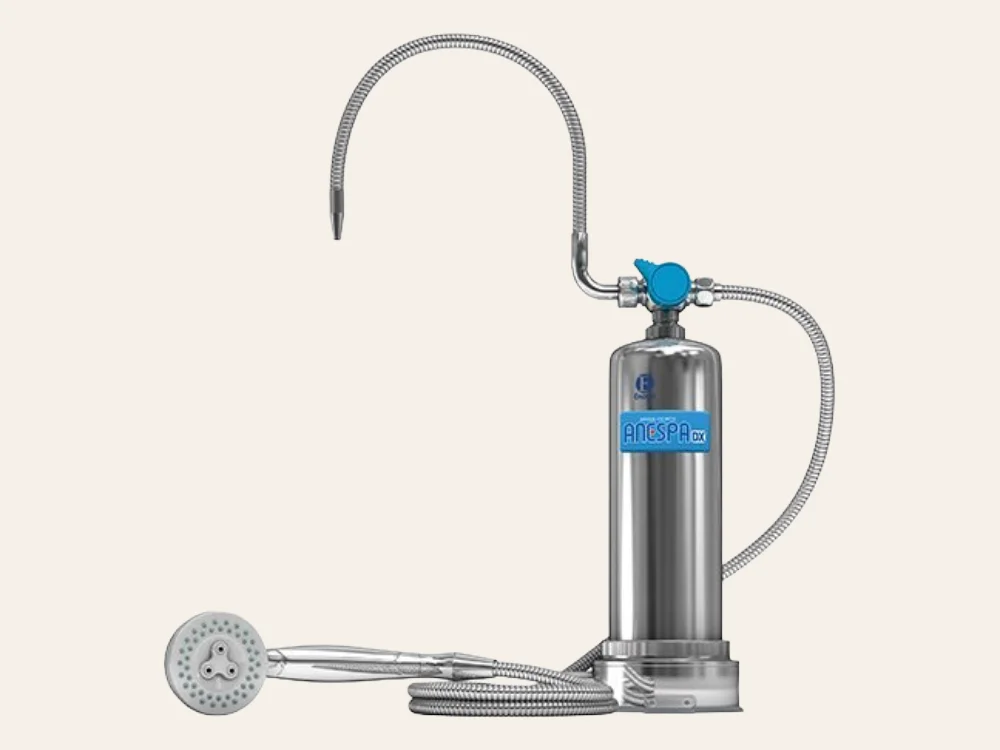
The Anespa DX is Enagic's shower and bath filter and mineraliser—a portable, shower- or bath-mounted unit that removes chlorine and chloramines from shower water and re-adds trace minerals via Futamata hot spring stones, producing slightly alkaline, dechlorinated water for both shower and bath use.

Water Wellness Consultant · Health Coach · 8 years of Enagic distributor experience
Last updated 5 June 2026
Key facts
- —The Anespa DX retails at approximately USD $3,420 / CA$3,850 / AUD $3,450 / €2,800 through authorised Enagic distributors; it is not sold on Amazon or third-party marketplaces.
- —Two-stage filtration: OHE ceramic/carbon cartridge (removes chlorine, chloramines, rust, sediment) + Futamata mineral stone cartridge (remineralises and slightly alkalises to ~7.5–8.5).
- —Both filter components require replacement on different schedules. External filter: every 6–12 months. Internal ceramic cartridge: every 1–3 years (1.5–2 years recommended average). Combined annual cost approximately USD $200.
- —Only shower filter category product that also functions as a bath filter and mineraliser—a hose adapter allows it to fill a bath.
- —Does not remove PFAS, heavy metals, fluoride, or nitrates from shower water. It is a chlorine/chloramine filter and mineral enhancer, not a comprehensive water treatment system.
TL;DR
Who this is for
- ✓People with sensitive skin producing symptoms that resemble eczema, psoriasis, or scalp issues who suspect chlorinated water is a contributing factor
- ✓People who shower or bathe in hard, heavily chlorinated water and notice skin or hair deterioration
- ✓Households with children who bathe regularly and want to reduce their chlorine/chloramine exposure—the bath filter and mineraliser function is unique to the Anespa in this category
- ✓People who already own or are considering a K8 and want the same water quality benefit in the bathroom
Who this isn't for
- —People looking for a basic chlorine shower filter—a $129–$169 Jolie, Canopy, or Afina achieves the core chlorine removal at a fraction of the price
- —People in areas with PFAS or heavy metal contamination—the Anespa DX does not address these, but can be combined with a whole-house filter system for clean, mineralised bath and shower water
- —People looking for a drinking water appliance—the Anespa DX is shower/bath only
The honest headline
The Anespa DX has one significant competitive differentiator and one significant weakness.
Differentiator: It is the only product in the shower filter category that remineralises water via Futamata hot spring stones, and the only one usable in the bath. No Jolie, Canopy, Aquasana, or Afina does either of these things. If the mineralisation and bath functionality matter to you, there is no alternative at any price.
Weakness: It costs USD $3,420 / CA$3,850 / AUD $3,450 / €2,800—approximately 25–35× more than the competing shower filters that achieve the same chlorine removal outcome. The premium buys the Futamata mineral stage and the bath capability. If those aren't your priorities, the premium is hard to justify.
This review works through both in detail, so you can make a clear decision.
What the Anespa DX actually does
Water enters the unit from your existing shower or bath connection, passes through two stages, and exits through your shower head or bath hose.
- —Stage 1—OHE cartridge (Oxidation, Hydrogen, Electrolysis): A ceramic and activated carbon block that removes chlorine, chloramines, rust, sediment, and some volatile organic compounds. This is functionally equivalent to what premium shower filters do. Flow rate and temperature tolerance are similar to competing products.
- —Stage 2—Futamata mineral stone cartridge: Water passes over three distinct mineral elements housed in the ceramic cartridge, each with a different function:
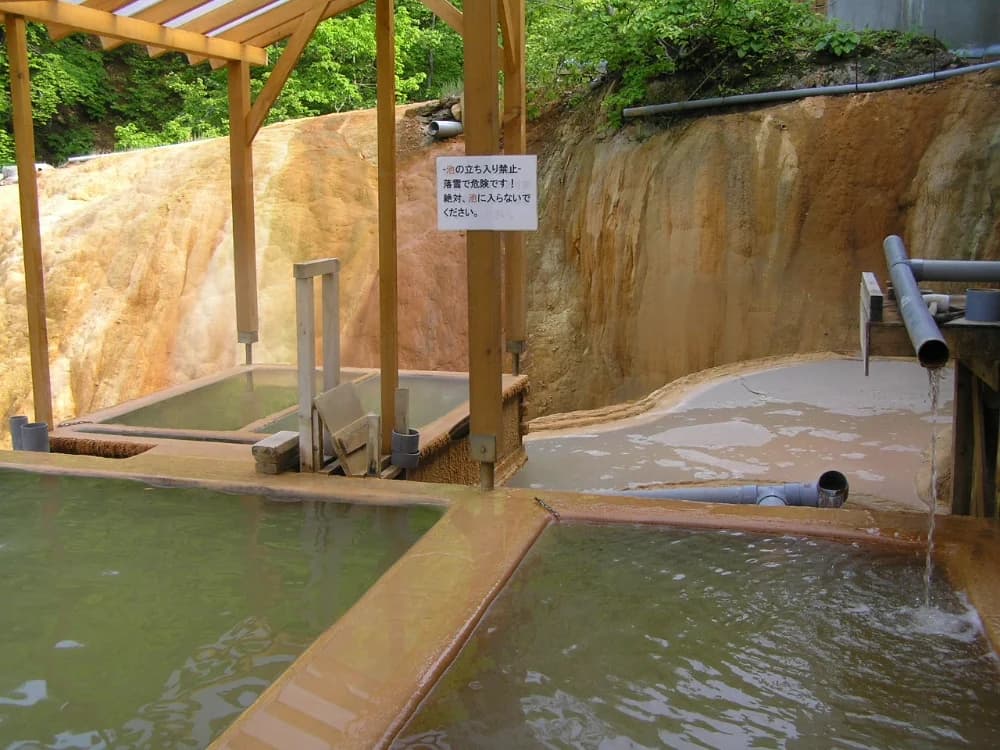
- —Tufa—A mineral stone sourced directly from the Futamata Radium Hot Spring in Hokkaido, Japan. Futamata is a traditional Japanese hot spring (onsen) whose waters have been used for centuries in Japanese spa practice. The Tufa stone releases trace minerals into the water and produces the same gentle, relaxing effect associated with Futamata's natural spring waters.
- —MIC stone—Generates activated, mildly alkaline water. This is the primary mechanism behind the Anespa's pH adjustment—raising output water from municipal tap pH (typically 6.5–7.5) to approximately 7.5–8.5 depending on source water quality.
- —Power Stone—A tourmaline ceramic that generates negative ions during water contact. Negative ion generation is common to natural hot spring environments and is associated with relaxation and reduced cortisol response. This is the mechanism behind the “onsen experience” claim. No peer-reviewed evidence specific to shower-based negative ion delivery exists, but the mechanism is documented in natural spring environments and is consistent with Enagic's description.
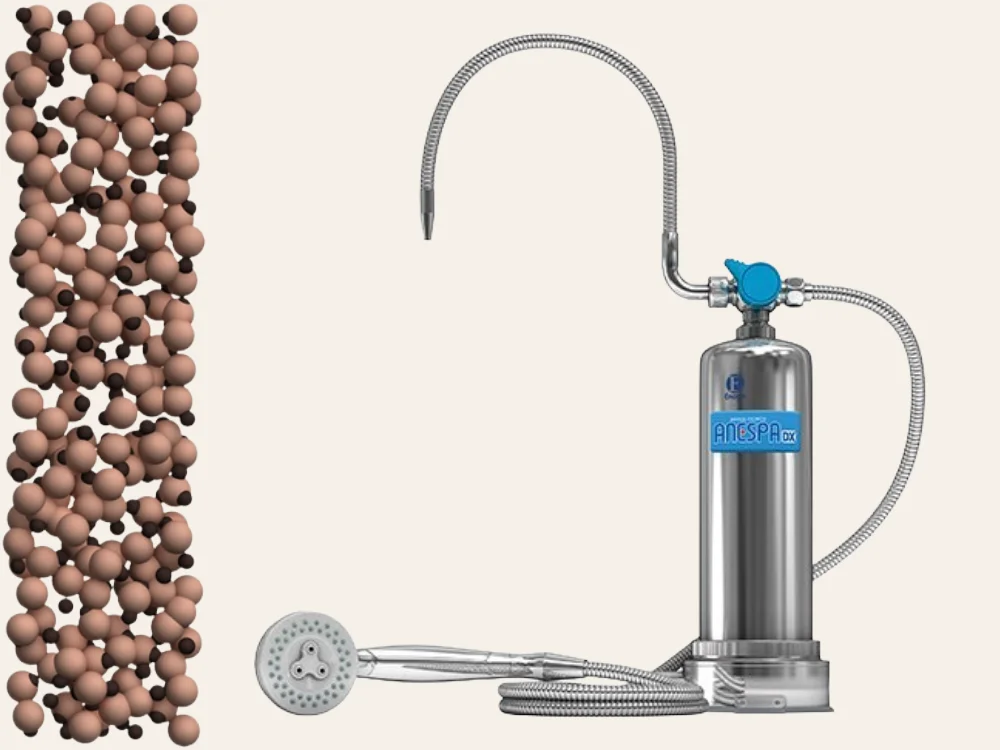
The ceramic layer in the cartridge is approximately three times thicker than comparable products on the market—a manufacturing detail Enagic cites as contributing to mineral output quality and cartridge longevity.
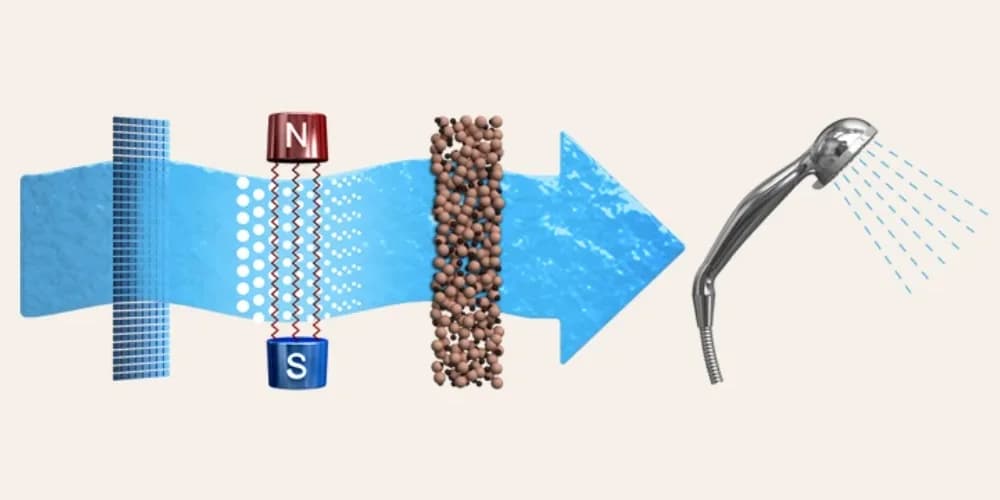
- —Neodymium magnet—A high-quality permanent magnet positioned in the water pathway. Its function is to decompose water molecules into smaller clusters, which activates the water and makes it more receptive to mineral absorption. Smaller water clusters also penetrate the skin surface more easily—this is the mechanism behind the “better absorption” claim in Enagic's product literature. No peer-reviewed evidence exists specifically for the Anespa DX's neodymium magnet; the smaller cluster theory has a broader research context in structured water literature.
- —Chikutan (bamboo charcoal)—The ceramic cartridge contains Chikutan, a form of activated bamboo charcoal used in traditional Japanese water purification. Bamboo charcoal has documented adsorption properties—it binds to impurities and contributes to water softening and odour removal. It also has a long history of use in Japanese wellness practice. This is a meaningful differentiator from competitors whose cartridges use only mineral stones.
The output: dechlorinated, slightly mineralised, mildly alkaline water with negative ion activity—closer in profile to natural hot spring water than to municipal tap water.
Installation
The Anespa DX connects between your water supply and your shower head. Installation is DIY-capable for most bathrooms with standard fittings. The unit sits on the shower wall or can be counter-mounted; a hose connects to your shower head (or to a bath adapter for bath use).
Inside the Anespa DX box, you'll find a supply hose and selection of threading adapters, which help you to connect it to most standard showers or bathtub faucets. If your shower and bath are in proximity, you can leave the Anespa unit in the shower and turn the valve to route the water flow into your bath to soak.
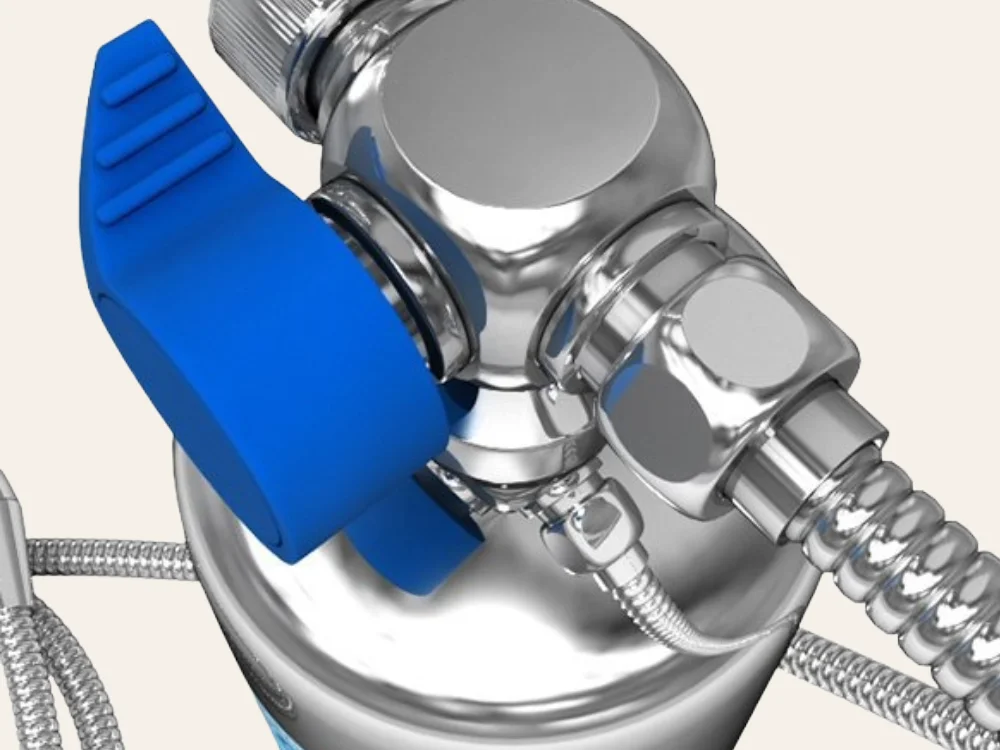
Most users self-install in 20–30 minutes. Non-standard plumbing configurations (narrow shower cubicles, fixed shower heads, non-standard thread sizes) may require a plumber. Enagic provides thread adapters for common non-standard fittings.
The unit is wall-mounted via two screws. It is approximately 25cm × 13cm × 13cm and adds visible bulk to the shower wall—something to consider in small shower spaces.
Technical specifications
| Specification | Detail |
|---|---|
| Model name / number | ANESPA DX / ANSP-02 |
| System type | Mineral ion water activator |
| Water source connection | Water supply plug, closed type |
| Production rate | 2.6–4.0 gallons per minute (approximately 15 litres per minute) |
| Electrode plates | None — not an electrolysis device |
| Power supply | None required |
| Warranty | 3 years |
| Dimensions | Approximately 25cm × 13cm × 13cm |
| Manufactured | Japan (Enagic Co., Ltd.) |
What it feels like to use
This is subjective territory, and I'll be direct: the initial experience in contrast with a standard shower is subtle for most people. Water feels slightly softer. Skin doesn't feel tight or dry after showering the way it does after heavily chlorinated tap water. Hair feels less stripped. The real improvement comes after using the Anespa for a period of time.
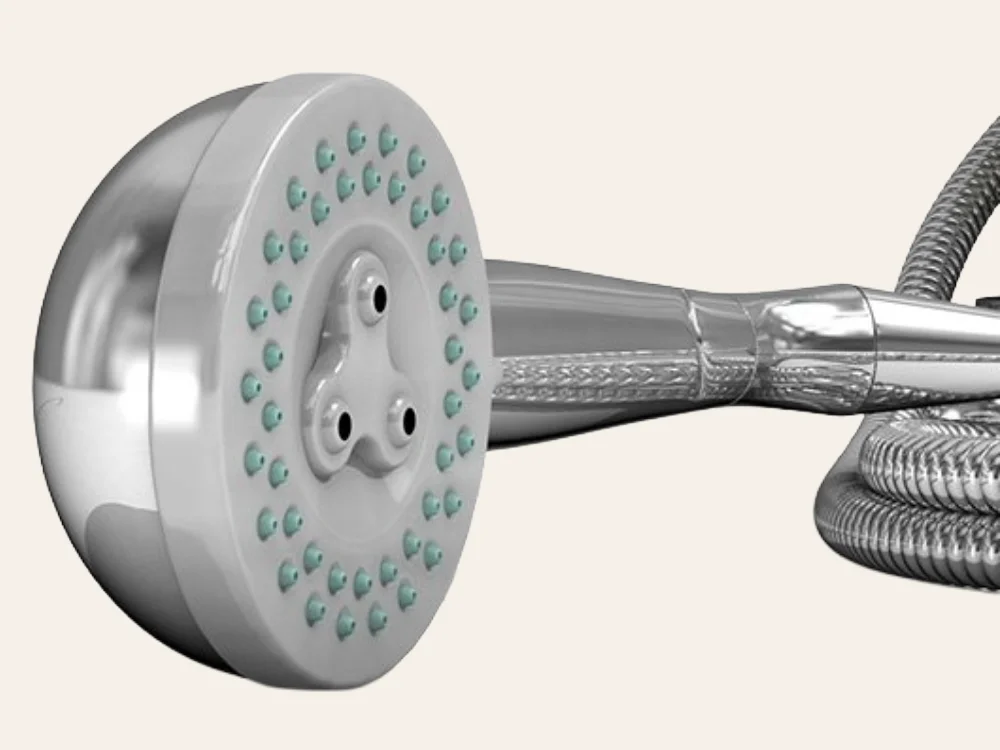
These are real differences, but they are not dramatic within a day. Chlorine removal makes a measurable difference to skin surface pH. People who buy the Anespa DX expecting a spa transformation may be underwhelmed. People who buy it because chlorinated water is genuinely aggravating their skin condition typically notice a meaningful change within two to four weeks.
For bath use: filling a bath with Anespa DX water and adding Himalayan or Dead Sea salt produces something that genuinely feels different from a standard bath. The mineralisation is relevant here; you're bathing in water with a mineral profile closer to a hot spring than to tap water. Whether that's worth USD $3,420 depends on how much you value the bath experience and whether your household baths regularly.
Shower filter comparison
| Feature | Jolie | Canopy | Aquasana AQ-4100 | Afina | Anespa DX |
|---|---|---|---|---|---|
| Chlorine removal | ✓ | ✓ | ✓ | ✓ | ✓ |
| Chloramine removal | ✗ | ✗ | ✓ | ✓ | ✓ |
| Remineralisation | ✗ | ✗ | ✗ | ✗ | ✓ |
| pH adjustment | ✗ | ✗ | ✗ | ✗ | ✓ (7.5–8.5) |
| Bath use | ✗ | ✗ | ✗ | ✗ | ✓ |
| Rust/sediment removal | Partial | Partial | Partial | ✓ | ✓ |
| Filter media | KDF-55 + Calcium Sulfite | KDF-55 + Calcium Sulfite + Carbon | KDF-55 + Coconut Carbon | KDF-55 + Calcium Sulfite + Coconut Activated Carbon | OHE ceramic/carbon + Futamata mineral stone |
| Filter lifespan | 3 months | 3 months | 6 months | 2 months | Internal 1–3 yrs · External 6–12 mos |
| Warranty | None | 12 mos (lifetime w/ subscription) | 1 year | Lifetime w/ subscription | 3 years |
| Annual filter cost (USD) | ~$132 | ~$108 | ~$120 | ~$174 | ~$200 |
| Unit price (USD) | ~$169 | $150 | ~$80 | ~$129 | ~$3,420 |
| Expected unit lifespan | 3–5 years | 3–5 years | 5–7 years | 3–5 years | 10–15 years |
| 5-year total cost (USD) | ~$829 | ~$690 | ~$670–$690 | ~$999 | ~$4,220 |
| NSF certified | ✓ (NSF-177) | ✓ (NSF-177) | ✓ (NSF-177) | ✓ (NSF-177) | ✗ |
The Anespa DX is the only shower filter with no direct competitor at any price. That's its moat. The question is whether what it uniquely offers matches what you actually need.
Honest pros and cons
Pros
- —Only product in category with Futamata mineralisation
- —Only product usable for both shower and bath
- —Chloramine removal (not just chlorine)—increasingly important as more utilities switch from chlorine to chloramine disinfection
- —6–12 month filter life—longer than most competitors
- —Enagic build quality—the unit is designed to last 10–15 years
- —Distributor support for cartridge supply ongoing
- —Negative ion generation via Power Stone tourmaline element
- —3-year warranty—significantly longer than Jolie (none), Aquasana (1 year), and Canopy (1 year standard); Afina and Canopy offer lifetime warranty only with active subscriptions
Cons
- —Price is high relative to what competitors offer for chlorine removal alone
- —Does not remove PFAS, heavy metals, or fluoride—but none of the available options do
- —Adds visible bulk to the shower wall
- —Annual cartridge cost (~USD $200) is slightly higher than competing filters
- —Plumber may be required for non-standard shower configurations
- —No third-party independent lab testing of Futamata mineral output published—Enagic claims; not independently verified data available
Who buys the Anespa DX and why
In my experience consulting on Enagic products, the buyers who find the Anespa DX is right for them fall into a few clear groups:
- —Sensitive skin households. Particularly households with children who bathe daily in chlorinated water. The bath function matters here. A child bathing in Anespa DX water five to seven times a week is getting a meaningful cumulative reduction in chlorine exposure compared to standard tap water. For one adult who showers daily, the cost-benefit is harder.
- —K8 households looking for consistency. People who already own a K8 for drinking water and cooking often add the Anespa DX to extend the same water quality principles to the bathroom. The combined system—K8 for ingestion, Anespa for skin contact—is a coherent whole-home approach.
- —Spa and wellbeing-focused buyers. People who take bathing seriously—regular baths, Epsom/mineral salt additions, skin-first routines—often find the Anespa DX fits the investment frame they already operate in. For them, the bath fill function and mineral profile are the whole point.
Who finds it harder to justify: people with mild or no skin issues, people without children, those who primarily shower (not bathe), and people whose main goal is basic chlorine removal. For all four groups, an $80–$169 filter can achieve the primary goal.
Is the Anespa DX worth it?
Honestly: it depends more on your specific situation than almost any product I've been asked to assess.
If you have a household with sensitive-skin members who bathe regularly, are already committed to water quality across your home, and value the Futamata mineral stage on principled grounds—yes, the Anespa DX is the only product that does what it does, and it's well-made and built to last.
If you're primarily concerned about chlorine in your shower and budget matters, no. The core chlorine outcome is achievable for $80–$169. The Anespa DX premium is specifically for the remineralisation and bath capability.
The honest recommendation I give in consultations: tell me about your household's actual shower and bath patterns, your water quality, and whether you have any skin conditions—and I'll tell you whether the Anespa makes sense or whether a basic filter achieves what you need.
FAQ
What is the Anespa DX?
+
The Anespa DX is a shower and bath mineraliser by Enagic. It connects to your shower water supply, removes chlorine and chloramines through a two-stage filter, and adds trace minerals from Futamata hot spring stones (Hokkaido, Japan). It is the only product in the shower filter category with both remineralisation and bath use capability.
How much does the Anespa DX cost?
+
The Anespa DX price is approximately USD $3,420 / CA$3,850 / AUD $3,450 / €2,800 through authorised Enagic distributors. It is not available on Amazon or third-party marketplaces. Annual filter cartridge replacement costs approximately USD $200.
Is the Anespa DX worth the money?
+
For households with eczema or sensitive skin members, especially children, who bathe regularly, often yes—there is no competing product that offers Futamata remineralisation and bath capability. For people primarily wanting chlorine removal from a daily shower, no. Shower filters at USD $129–$169 achieve the chlorine outcome at a fraction of the price. The honest answer requires knowing your household's actual patterns and skin needs.
How does the Anespa DX compare to a Jolie shower filter?
+
Both remove chlorine. The Anespa DX adds Futamata mineral stone remineralisation, slight pH adjustment to 7.5–8.5, and bath use capability, none of which Jolie offers. Jolie is approximately USD $169 with $132/year in filters. The Anespa DX is USD $3,420 with $200/year in filters. The question is whether the remineralisation and bath capability are worth ~$3,391 more over five years.
Does the Anespa DX help with eczema?
+
It addresses two documented eczema aggravating factors: chlorine/chloramine exposure and water mineral profile. It is not a treatment for eczema. Users with sensitive skin frequently report less post-shower dryness and irritation; the Perkin et al. 2016 study in the Journal of Investigative Dermatology supports the hard water/eczema association. Clinical evidence specific to the Anespa DX does not exist.
Does the Anespa DX help with psoriasis?
+
The same mechanism that makes it relevant for eczema applies to psoriasis: chlorine removal and mineral water contact. Both conditions involve compromised skin barrier function that is commonly aggravated by chlorinated tap water. The Perkin et al. 2016 study in the Journal of Investigative Dermatology established the hard water/skin barrier link; the same logic applies to psoriasis. Clinical evidence specific to the Anespa DX and psoriasis does not exist. Users with psoriasis report reduced irritation and dryness after showering in dechlorinated, mineralised water. It is not a psoriasis treatment. Always consult your dermatologist before changing your skin care protocol.
Does the Anespa DX improve hair quality?
+
Chlorine strips natural oils from hair; the same oils that keep it soft, manageable, and colour-fast. Removing chlorine at the shower source means hair is washed in water that isn't stripping those oils on contact. Users consistently report softer, less tangled hair and reduced scalp dryness within a few weeks. The Futamata mineral stage adds trace minerals to the water that may further support hair shaft condition, though no peer-reviewed evidence specific to the Anespa DX exists for this claim. For colour-treated hair, dechlorinated water also extends colour longevity. Chlorine is one of the primary causes of colour fade between salon visits.
Can I use the Anespa DX to wash my pet?
+
Yes. The bath adapter allows you to fill a bath or use the hose to rinse pets. Several Anespa owners report using it for dogs with dry skin or itchy coats. The same chlorine reduction and mineral water benefits that apply to human skin apply to animal skin. The dechlorinated water is gentler than standard tap water for bathing pets with sensitive skin. There is no clinical evidence specific to pets; this is reported user experience.
How long do Anespa DX filters last?
+
Both the OHE ceramic cartridge and the Futamata stone cartridge require replacement on different schedules. The external filter needs replacement every 6 to 12 months (depending on water usage and chlorine levels). The ceramic cartridge requires replacement every 1 to 3 years (with 1.5 to 2 years being the recommended average).
How much do the Anespa DX filters cost?
+
At the time of publication, the Anespa Internal Cartridge (Ceramic) is $270.00, and the Anespa External Cartridge is $110.00 for the US market. These prices vary per country.
Does the Anespa DX remove PFAS?
+
No. The Anespa DX removes chlorine and chloramines. It does not remove PFAS, heavy metals (lead, arsenic), fluoride, or nitrates. For shower exposure to these contaminants specifically, dermal absorption is significantly lower than ingestion, but if your water supply has elevated heavy metals, a point-of-entry whole-house filter is the appropriate solution.
Does the Anespa DX affect water pressure or flow rate?
+
The Anespa DX is designed to maintain normal shower pressure. Unlike some inline filters that restrict flow, the Anespa's two-stage cartridge system is engineered for full residential flow rates. Some users report a slight reduction in pressure compared to an unfiltered shower. This is typical of any inline filter and is generally imperceptible in normal use. If you have unusually low incoming water pressure, check with your plumber before installing any inline filter system. If you install the Anespa DX and notice a reduction in pressure, you can remove the internal yellow ring and see if the flow rate improves.
Can I install the Anespa DX myself?
+
Most users self-install in 20–30 minutes using the included fittings. Standard G1/2 shower connections are straightforward. Non-standard thread sizes or fixed shower heads may require a plumber. Enagic provides thread adapters for common configurations.
Is the Anespa DX compatible with rain shower heads and non-standard shower types?
+
The Anespa DX replaces your shower head; it works as a handheld shower or showerhead. Non-standard thread sizes (common in some European and older Australian plumbing) may require the additional adapters Enagic provides or a plumber's assistance. Very large, ceiling-mounted rain shower heads are incompatible with the Anespa.
What is the difference between the Anespa DX and the original Anespa?
+
The DX is the current-generation model, replacing the original Anespa with improved filter media, updated mineral stone formulation, and refined housing. If you see an original Anespa for sale secondhand, check that cartridges are still available. Enagic has phased out support for earlier models.
Where is the Anespa DX manufactured?
+
The Anespa DX is manufactured by Enagic Co., Ltd. in Japan. Enagic was founded in Osaka in 1974 and manufactures all of its products in Japan. The Futamata mineral stones are sourced from the Futamata region of Hokkaido, a natural hot spring area in northern Japan. The unit carries a 3-year manufacturer warranty.
What are the Anespa DX technical specifications?
+
Model: ANESPA DX / ANSP-02. System type: Mineral ion water activator. Water source connection: Water supply plug, closed type. Production rate: 2.6–4.0 gallons per minute (approximately 15 litres per minute). Power supply: None required. Electrode plates: None—not an electrolysis device. Warranty: 3 years. Manufactured in Japan by Enagic Co., Ltd.
Can I connect the Anespa DX to my bath faucet?
+
Yes. The Anespa DX includes a bath adapter that allows you to route water from the unit into your bath via a hose. Leave the unit mounted in the shower and switch the valve to divert flow into the bath. This is the feature that makes the Anespa DX unique in the shower filter category. No other product at any price offers bath mineralisation capability.
Book a consultation
Considering the Anespa DX?
Considering the Anespa DX for your household? Book a free 30-minute consultation—we'll look at your local water quality data and shower and bath patterns and give you a direct recommendation.
Book a water wellness consultation30 minutes. Free. No obligation.